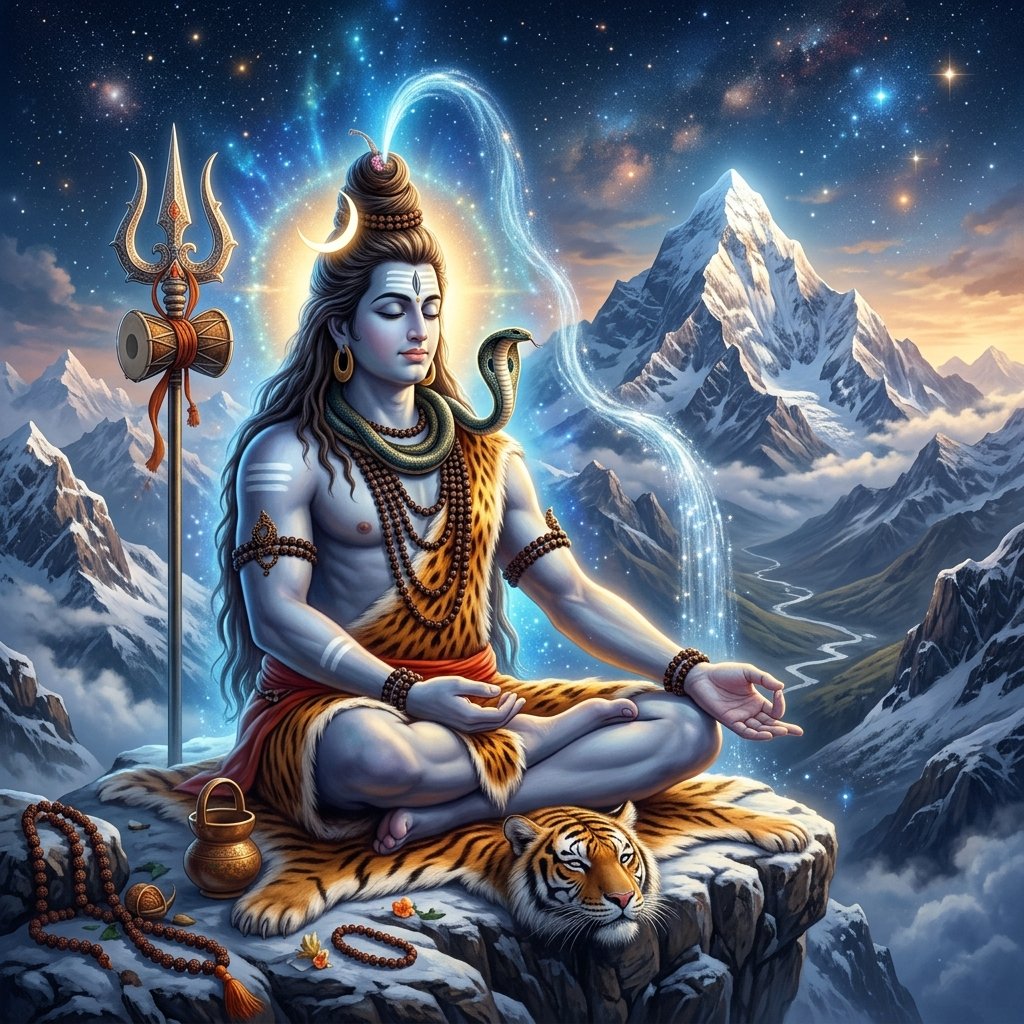
Shri Kedarnath Jyotirlinga
🔱 HIGHEST JYOTIRLINGA • PANCH KEDAR

Shri Kedarnath Jyotirlinga

Shri Kedarnath Temple • 📍 Rudraprayag District, Garhwal Himalayas, Uttarakhand

Standing proudly at an awe-inspiring altitude of 3,583 meters against the majestic backdrop of snow-capped Kedarnath peaks and the Mandakini River, Shri Kedarnath is the highest among the 12 sacred Jyotirlingas of Lord Shiva and the principal sanctuary of the Panch Kedar.

🪔
Presiding Deity Lord Kedarnath (Sadashiva in Conical Swayambhu Bull Hump Form)
👑
Divine Consort Mata Parvati (Gauri)
🌊
Sacred River & Lake Mandakini River & Chorabari Tal (Gandhi Sarovar)
Historical Antiquity Mahabharata Epoch (Consecrated by Pandavas; Restored by Adi Shankara)
🏛️
Architectural Style Cyclopean Interlocking Himalayan Ashlar Granite Masonry
🚩
Major Festivals Kapat Opening, Badri-Kedar Utsav, Shravan Maas, Maha Shivratri
Advertisement

🏛️ Detailed History & Sacred Architecture

The timeless sanctuary of Shri Kedarnath Jyotirlinga traces its inception to the post-Mahabharata era. Seeking redemption for the karmic affliction of fratricide and gotra-hatya following the Kurukshetra war, the five Pandava brothers embarked on a pilgrimage to the Himalayas to implore Lord Shiva's pardon. Escaping their persistent pursuits, Lord Shiva assumed the form of a celestial bull and dove into the alpine ground at Kedar. When the mighty Pandava prince Bhima attempted to hold Him, only the triangular conical hump remained above the surface, transforming into the eternal Swayambhu Jyotirlinga.

In the 8th century CE, Jagadguru Adi Shankaracharya rebuilt the present stone edifice before attaining Mahasamadhi behind the sanctum at the young age of thirty-two. The temple is constructed from colossal, finely dressed granite boulders fitted together with mortarless interlocking joints on a high stone plinth. This remarkable engineering marvel has defied severe seismic shocks, avalanche pressures, and sub-zero freeze-thaw cycles for over a thousand years. During the catastrophic Himalayan flash floods of June 2013, a colossal monolith—now revered as the Bhim Shila—drifted downstream and wedged itself precisely fifty feet behind the temple, miraculously splitting the roaring fury of water and debris around both flanks and safeguarding the sanctum unscathed.

📜 Sacred Pauranik Legends & Divine Leelas

The sacred Skanda Purana and Mahabharata recount the origin of the revered Panch Kedar circuit. When Lord Shiva dove into the earth at Kedarnath to elude the Pandavas, various parts of His divine bull manifestation surfaced at four other sacred alpine sites across the Garhwal Himalayas. His conical hump remained at Kedarnath; His divine arms (Bahu) manifested at Tungnath (the highest Shiva temple in the world at 3,680m); His sacred face (Mukha) appeared at Rudranath; His divine navel (Nabhi) emerged at Madhyamaheshwar; and His matted ascetic locks (Jata) surfaced at Kalpeshwar.

By completing the worship of all five parts of Sadashiva across these high peaks, the Pandavas were absolved of all battlefield sins and granted eternal liberation. Another ancient lore narrates that Nar and Narayana, the twin incarnations of Lord Vishnu, worshipped an earthen lingam of Shiva at Badrikashram. Pleased with their unswerving devotion, Lord Shiva appeared in person and granted their prayer that He would reside permanently in the Kedarkhand wilderness as an eternal Jyotirlinga for the salvation of all humanity.

🌟 Spiritual Glory & Vedic Hymns

Kedarnath is celebrated across ancient Shaivite texts as the supreme mountain sanctuary where Shiva removes the deepest fears of mortality and ignorance. The Dvadasa Jyotirlinga Stotram reverently proclaims: "Mahadripashve Cha Tate Ramantam Shuddhadri Samstham Munibhih Prapujyam | Surasurairvandita Padapadmam Shrikedaranatham Shivamishamide ||"

महाद्रिपार्श्वे च तटे रमन्तं सम्पूज्यमानं सततं मुनीन्द्रैः। सुरासुरैर्यक्षमहोरगाद्यैः केदारमीशं शिवमेकमीडे॥
English Meaning: "On the sacred crests of the great Himalayas, joyfully residing on the riverbank and ever venerated by the greatest of sages, gods, demons, and celestial beings—I surrender unto Lord Kedarnath, the one supreme Shiva."

🛕 Sanctum Sanctorum, Sacred Kunds & Highlights

✨ Swayambhu Conical Rock Lingam

The natural, uncarved triangular granite lingam representing the sacred hump of Sadashiva, anointed with pure ghee, honey, and Bilva leaves.

✨ The Miraculous Bhim Shila

The colossal protective boulder that rolled down during the 2013 flash floods and lodged itself behind the temple, deflecting devastating torrents away from the shrine.

✨ Bhairavnath Temple

Situated on a ridge 500 meters above Kedarnath, this shrine is dedicated to Kshetrapala Bhairav, the fierce guardian deity who protects Kedarnath valley during winter.

✨ Adi Shankaracharya Samadhi & Statue

The grandly restored memorial and 12-foot black chlorite schist statue of Jagadguru Adi Shankara situated immediately behind the temple.

✨ Chorabari Tal (Gandhi Sarovar)

A pristine glacial lake at 3,900 meters, 3 km trek from the temple, where Mahatma Gandhi’s ashes were immersed in 1948.

✨ Mandakini River & Gaurikund Springs

The holy glacial Mandakini River originating from Chorabari glacier, and the sacred thermal spring at Gaurikund where Goddess Parvati performed penance.

⏰ Darshan Vidhi, Temple Rules & Daily Aarti Timetable

The daily worship at Kedarnath begins in the pre-dawn hours with the traditional Maha Abhishek. The inner sanctum allows devotees to touch the holy Swayambhu Lingam and apply clarified butter during the morning session. After midday, the lingam is adorned with ornate brass Shringar and flowers. Like Badrinath, Kedarnath remains open for six months from late April/early May until Bhai Dooj in November, following which the deity’s mobile festival murti (Utsav Doli) is transferred to Omkareshwar Temple in Ukhimath.

Aarti / Sacred Ritual Prescribed Timings
Temple Opening & Mangala Aarti 04:00 AM - 05:00 AM
Morning Abhishek, Puja & Ghee Offering 05:00 AM - 07:00 AM
General Public Darshan 07:00 AM - 01:00 PM
Afternoon Sanctum Rest & Cleaning 01:00 PM - 05:00 PM
Evening Shringar & Sandhya Aarti 06:00 PM - 07:30 PM
Shayan Aarti & Temple Night Closure 08:30 PM
Advertisement

🚗 Complete Pilgrimage Travel Guide (How to Reach & Accommodation)

✈️ By Air & Helicopter

Jolly Grant Airport, Dehradun (approx. 240 km to Sonprayag). Direct passenger helicopter shuttles operate from helipads at Phata, Guptkashi, and Sirsi to Kedarnath helipad (approx. 7-10 minutes flight).

🚆 By Train

Rishikesh (216 km) and Haridwar (240 km) are the primary railheads. Pilgrims can board regular state transport buses or private cabs to Sonprayag/Gaurikund.

🥾 16 km Mountain Trek

The motorable road ends at Gaurikund. From there, an exhilarating 16 km paved mountain trail ascends along the Mandakini riverbank. Options include walking, ponies, palanquins (dandis), and basket carriers (kandis).

🗓️ Best Time to Visit

May to June and September to October offer crisp sunny skies and manageable cold. Monsoon months (July-August) can be prone to cloudbursts and landslides, requiring diligent planning.

🏨 Accommodation

GMVN cottages, pre-fabricated guest huts, swiss tents, and local dharamshalas are available at Kedarnath base camp, Lincholi, and Gaurikund.

🌸 Sacred Stotrams, Mantras & Aartis for Worship

Recite these dedicated stotrams, Vedic mantras, and chalisas to attain the divine grace of the presiding deity:

💡 Frequently Asked Questions (Pilgrim Guide)

❓ How long and difficult is the trek from Gaurikund to Kedarnath?

The trek from Gaurikund to Kedarnath is approximately 16 kilometers with a steep altitude gain of over 1,500 meters. It typically takes 6 to 8 hours for average walkers. Well-maintained rest shelters, clean drinking water stalls, and medical centers are placed along the path.

❓ Where is Lord Kedarnath worshipped during the winter season?

When Kedarnath is blanketed under heavy snow for six months, the ceremonial moving idol (Utsav Doli) is brought down in a grand procession to the Omkareshwar Temple in Ukhimath, where daily worship continues unabated.

❓ What is the significance of the Bhim Shila boulder?

During the 2013 cloudburst and flood disaster, a gigantic rock washed down the slope and halted exactly fifty feet behind the temple. It acted as an unshakeable breakwater, diverting millions of gallons of churning water and boulders to either side of the temple walls.

❓ Which temples constitute the sacred Panch Kedar circuit?

The Panch Kedar comprises Kedarnath (the bull’s hump), Tungnath (arms), Rudranath (face), Madhyamaheshwar (navel), and Kalpeshwar (hair locks), all located across the scenic Garhwal Himalayas.

🕉️ Explore Other Sacred Hindu Pilgrimages

Discover detailed guides for India's Char Dham, 12 Jyotirlingas, Sapta Puri, and overseas temples on our comprehensive pilgrimage portal.

← View All Sacred Pilgrimages 📿 Chant with Digital Japa Mala →