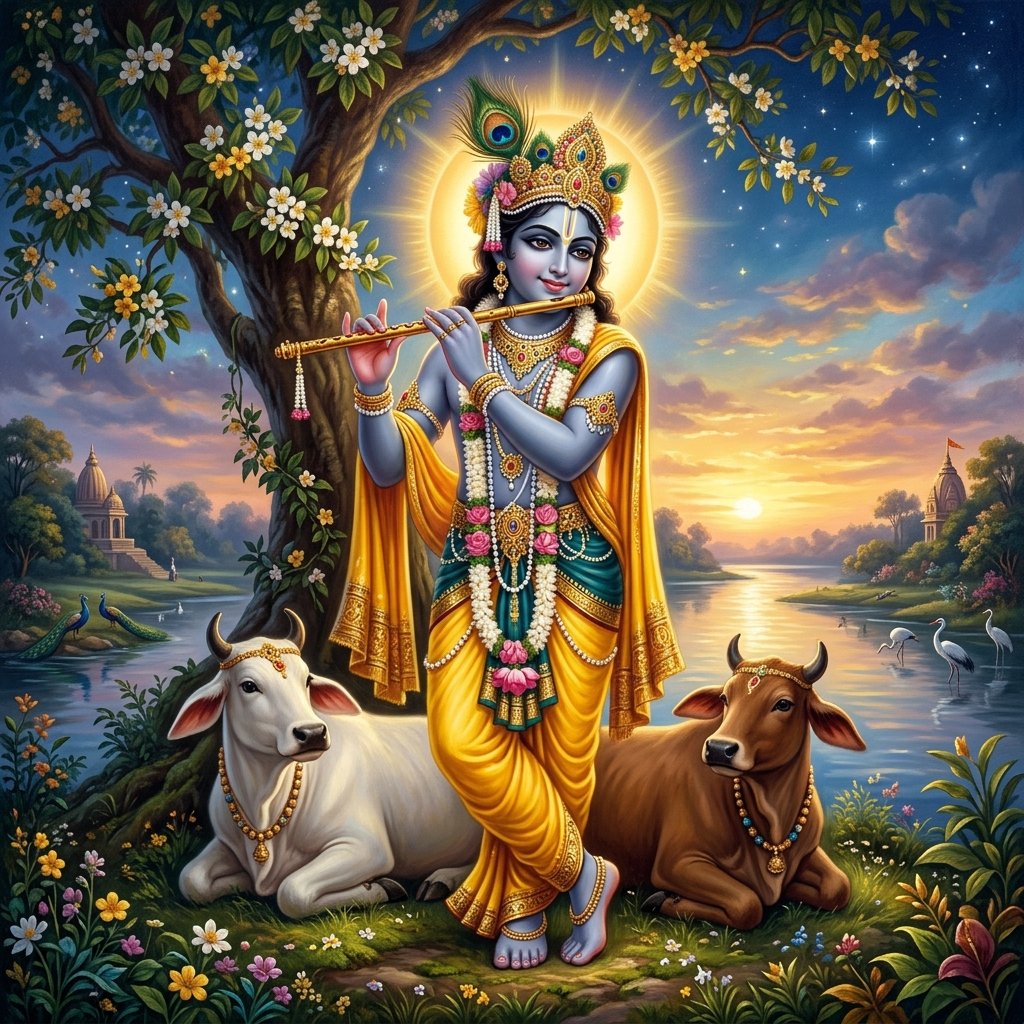
Chapter 12: Bhakti Yoga
Core Theme: The path of loving devotion, qualities of an ideal devotee, and surrender.
Chapter Overview & Background
Key Verses of the Chapter
Lessons for Daily Life
- • True devotion reveals itself as compassion, friendship, and forgiveness toward others.
- • Remaining steady through joy and sorrow, honor and dishonor, praise and blame, is the devotee’s true ornament.
- • God loves the one whose mind disturbs no one, and who is disturbed by no one in turn.
🥔 In Prabhu Vandan's View: Devotion Is Tested Through Character, Not Ritual
In answering Arjuna's question in chapter twelve, Krishna draws a subtle but important distinction — personal, manifest worship and impersonal, formless worship both ultimately reach the same goal, but the personal path is easier for embodied beings. This acknowledgment matters because it never ranks one mode of worship as superior and the other as lesser.
The most practical gift of this chapter is its list of thirty-five qualities that mark Krishna's beloved devotee — compassion, forgiveness, contentment, freedom from enmity, equanimity. What's striking is that not one of these qualities concerns a specific worship method, mantra, or ritual. They are all qualities of character and temperament, expressed in daily behavior — bearing no causeless enmity toward anyone, remaining unmoved by criticism or praise, and keeping a naturally calm, balanced mind.
This perspective shifts devotion away from outward display and toward inner character-building — a shift that remains just as relevant today, when spirituality is so often measured only by outward activity.
Daily 108 Mantra Japa Practice
Chant with the digital 108 japa counter, styled after an authentic Rudraksha mala.