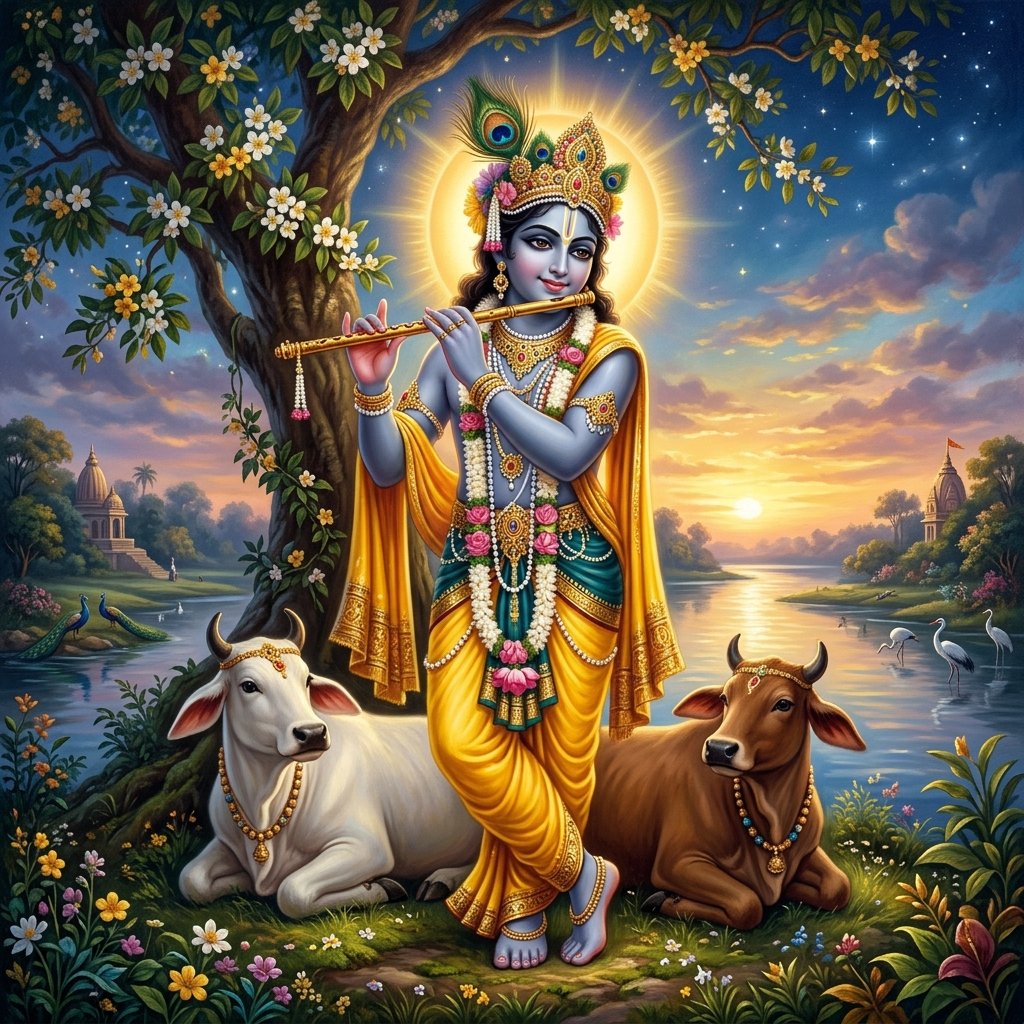
Chapter 15: Purushottama Yoga
Core Theme: The cosmic upside-down tree, the supreme Divine Person, and transcendence.
Chapter Overview & Background
Key Verses of the Chapter
Lessons for Daily Life
- • Recognize the impermanence of the world and live with dispassion and a spirit free of desire.
- • The light present in the sun, the moon, and fire is itself the Divine’s own radiance.
- • The Divine resides within the heart of every being, granting memory, knowledge, and discernment.
🥔 In Prabhu Vandan's View: The Upside-Down Tree: Staying Free Even While Connected
The fig-tree image in chapter fifteen — roots above, branches spreading below — can feel complex on first reading, but its practical essence is simple and profound. It shows that every object, relationship, and experience in this world has its source in the Divine, even though they appear to us as scattered and separate, like countless branches.
The greatest value of this outlook is that it doesn't teach us to abandon the world, but to see it in correct perspective. Just as a tree's branches stay connected to the root while still swaying freely in the wind, we too can remain fully engaged in our work, relationships, and responsibilities while staying inwardly unattached — as long as we don't forget that it's all connected to one deep source.
The symbol of dispassion as an axe is worth noting too — it's not an instruction to cut down the world, but to cut away blind, excessive attachment to it. Placing the Divine within the heart of every being, at the chapter's close, makes this teaching deeply personal — God is not some distant entity, but the very source of our own memory and discernment.
Daily 108 Mantra Japa Practice
Chant with the digital 108 japa counter, styled after an authentic Rudraksha mala.